
MENU
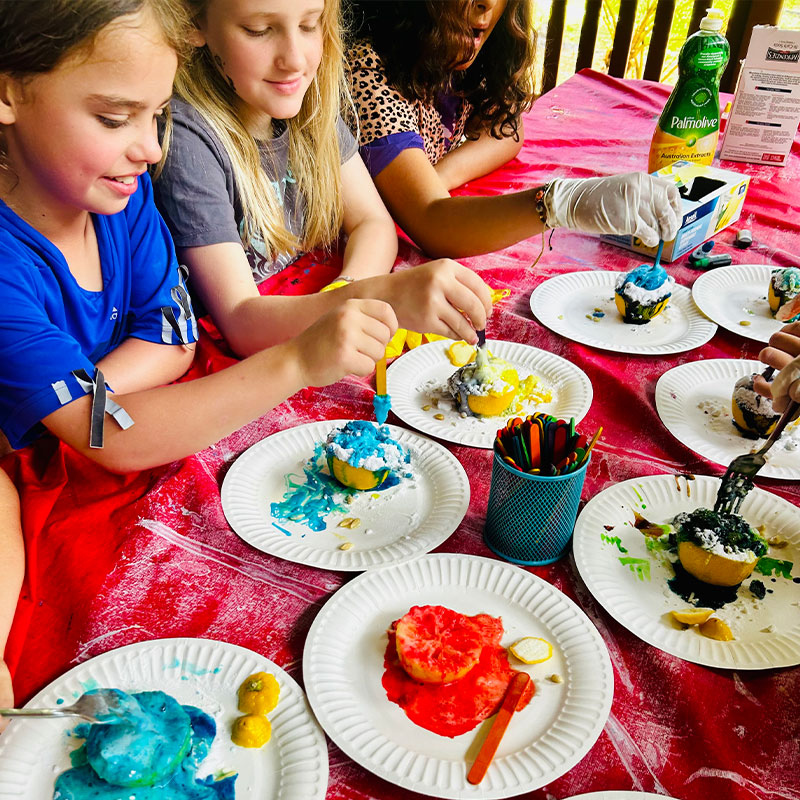
STEAM education at The River School is about nurturing curiosity, creativity and critical thinking through meaningful, hands-on learning. By integrating Science, Technology, Engineering, Arts and Mathematics, STEAM supports children to explore how the world works and how they can shape it with care, imagination and responsibility.
Grounded in Neohumanist values, STEAM learning at The River School develops the head, heart and hands, helping children become thoughtful problem-solvers who are equipped for life in a complex and changing world.


Science at The River School begins with curiosity and direct experience. Children explore the natural world through hands-on investigation, observation and inquiry, from the creek and gardens to the wider environment.
Learning is grounded in questions about how living systems work, how ecosystems are connected, and how humans can act responsibly within them. Through this process, children develop scientific thinking alongside environmental awareness, fostering both understanding and respect for all life.

Technology at The River School is introduced as a tool, not a distraction. Children learn to use technology purposefully to research, document, create and communicate, always guided by ethical awareness and balance.
Rather than passive consumption, technology supports creativity, collaboration and problem-solving. Children learn that technology is most powerful when used with intention, responsibility and care for its impact on people and the planet.
Engineering comes to life through hands-on making, tinkering and design challenges. In spaces such as the tinker shed and through project-based learning, children are encouraged to imagine solutions, test ideas, learn from mistakes and refine their thinking.
This process builds resilience, logical reasoning and collaboration. Children experience engineering as an iterative, creative process that values experimentation, teamwork and practical skill development.
The Arts are a vital part of STEAM learning at The River School. Creative expression through visual arts, music, movement, drama and storytelling allows children to explore ideas, emotions and perspectives in ways that words or numbers alone cannot.
The Arts build imagination, empathy and confidence, supporting children to express who they are and how they see the world. Creativity is not an add-on, but an essential way of thinking and learning across all areas of STEAM.
Children engage with numbers, measurement, patterns and problem-solving through meaningful contexts, from building projects and gardening to games and everyday challenges.
This approach helps children see mathematics as a useful, accessible tool for understanding the world, building confidence and logical thinking skills that support learning across all disciplines.